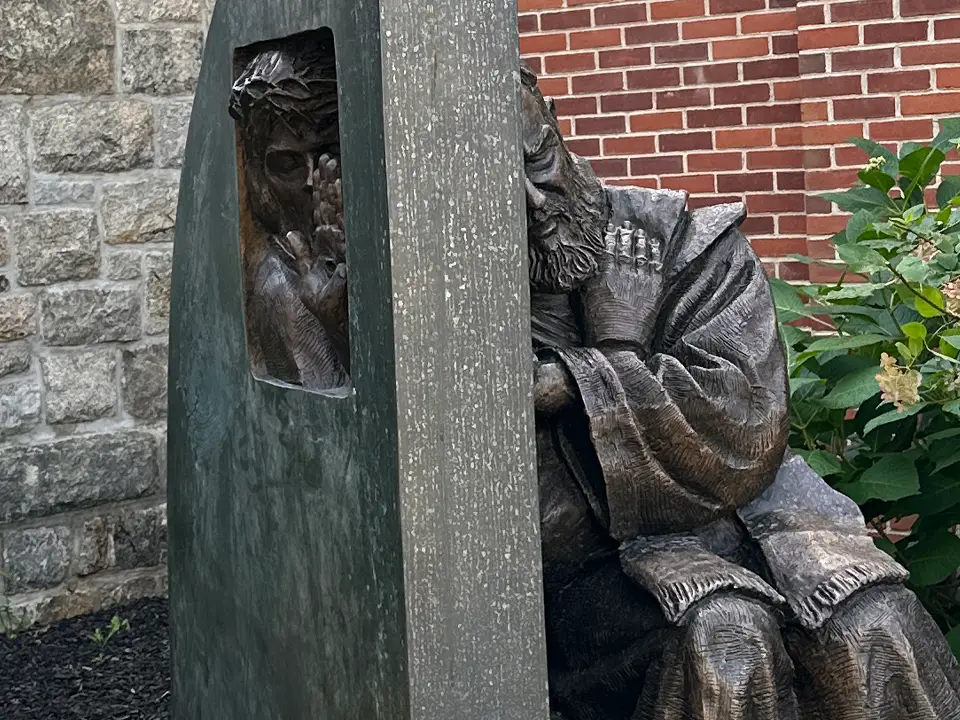


Last Sunday’s Gospel was a long and famous one: the Woman at the Well. With so many words, and much going on, it may be challenging to choose one personal message to take away and apply to our life. It is also a familiar reading, and we might be tempted to zone out or rehash what we have been taught in the past. For me, this year’s hearing was different. The word that stood out to me was THIRST.
Jesus famously said, “I thirst,” on the cross. Mother Teresa adopted those words as her mission spending her life trying to quench Jesus’ thirst by serving his poor and disadvantaged. She is famous for identifying that the deepest poverty is the feeling of being unloved, forgotten, or neglected, which she observed among people who are financially secure.
The Samarian woman seems to be from that category. She made the daily trek to the well to get the physical water she needed but with a history of five husbands and now a sixth lover, it seems that her heart could not be quenched. Then, no doubt her behavior had made her unpopular with the women of Sychar resulting in her becoming an outcast too. We do not know the reason for her lifestyle, but Jesus did. He knew her story and her inner thirst, so He went to her.
I see the thirst theme continuing in Matthew’s Gospel as Jesus teaches about the Judgement ahead and how our response to our neighbor’s thirst will be a factor as to if we end up in the sheep or goat lines – eternal life or eternal punishment. I read that differently now; Jesus is not just asking us to help those who are without food and water, but equally those who are unloved, forgotten, and neglected. In Brewster, Patterson, and North Salem, we may have a limited number of neighbors with food insecurity and most people rich or poor have large bottles of water accompanying them throughout their day, but we all know countless men, women, and children who are parched from thirsts of the heart and soul. As a disciple, we must follow Jesus’ model and go to them.
Escritura: This week, read Matthew 25:31-46. What is it saying to you?
Llamamiento a la acción: Consider people in your neighborhood that may be lonely or housebound. What might you do to help alleviate their thirst?