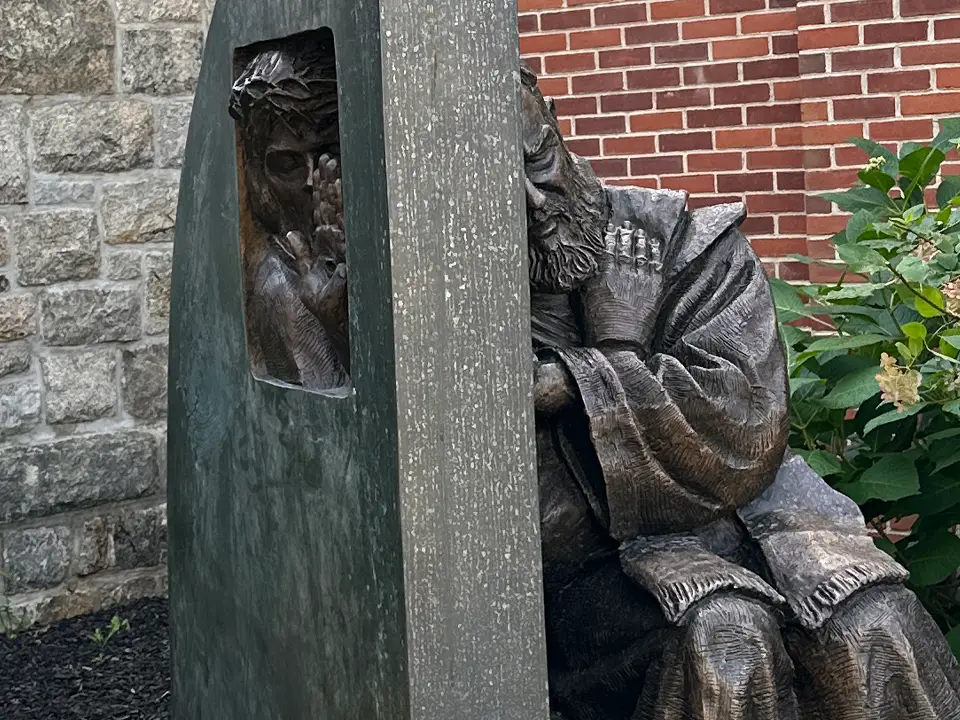

Suzanne Walsh has been exposing us to many lesser known, yet fascinating, saints in her weekly bulletin column. I try to read the saints of the day on the Catholic Calendar and Laudate apps and listen to the featured saint on Hallow. The differences between them are profound. Some died as children, some founded religious orders, others were hermits and lived in caves, reformed prostitutes and torturers, royalty, peasants, scholars, simple-minded, fat, thin, tall, short, and on and on. We can arguably say that every nation and classification of human beings physically, emotionally, intellectually, and professionally is represented in the Communion of Saints. Including people that in modern times would be classified as mentally ill.
I listened to a fascinating video discussion between Fr. Dave Pivonka, President of Franciscan University, and Dr. Greg Bottaro, founder of CatholicPsych Institute. Fr. Dave is a Franciscan, and he said, “I love St. Francis, but sometimes he went a little off the deep end.” Dr. Bottaro mentioned 18th century St. Benedict Labre, the namesake for Fr. Benedict Groeschel. Labre was eccentric and unkept; he wandered around looking for an order who would take him. No one would accept him and he died a beggar, but Fr. Groeschel saw in him a model of holiness that God can call us to in the weakness, imperfections, and poverty of our life. The two men agreed that St. Therese’s words in her Diary reveal that there were mental health issues and that she could potentially have been admitted to a hospital a number of times, yet she is a Doctor of the Church.
Dr Bottaro explained that if we used today’s assessments and applied it to the past, every single saint would have an issue. It is almost by definition. The more saintly a person becomes, the more unique he or she becomes, causing each to fall outside the norms that psychologists assess people by. That works for us too. As a Catholic, do you think and act differently than friends who aren’t? Do you feel you don’t really fit in? Can it be uncomfortable at times? If so, you may be headed in the direction of the holy men and women before us. Rather than hide or deny your weaknesses and differences, embrace them as God’s unique path for your sanctification.
Scripture: Read Mark 1:6-8. What stands out?
Call to Action: Have hope that we are never too wounded for God to intervene and make us saints.